Sunday, July 16, 2023

Joe & George Kitchen's Magical Fan-made Videos

A hilarious skateboard scene from Episode 7 of the Shenmue Short Stories video series

Anyone who has not yet discovered the collection of fan-made Shenmue videos created by Joe and George Kitchen... you've been missing out on a fantastic experience.

It is truly mesmerizing to see Shenmue's world in such beauty, with a cinematic presentation that pulls the viewer into the stories being told. Joe has hand-crafted the graphics and animations for each video over the course of weeks, months - even years before each video's release. From a technical standpoint, the scenes aren't running on the Shenmue engine, but were built inside animation software from the original assets. The result is just as convincing as if they were part of the original games.

Characters are fully animated and interact within meticulously-recreated environments enhanced with a multitude of stunning visual effects: blossom petals drift down from cherry trees, puddles still glistening from recent rain reflect the surroundings; mist swirls on a mountain road in the evening; clouds gradually change shape as the sun sets behind distant mountains; Christmas lights strung along house roofs softly illuminate a wintry night.

Entirely new environments that weren't present in the original games have been expertly imagined and crafted to the point of being indistinguishable from those of the original games: office and bedroom interiors, mountain cliffs and even the interior of a train.

Making the videos even more special are the gorgeous original musical compositions. Each music piece could easily be mistaken for an official Shenmue track, and they have been written with such detailed attention that the brothers even located and obtained the actual musical instruments and synthesized sounds. The music consists of compositions by both Joe and George.

Some videos bring officially-unused models to life, such as Master Yunhai from Shenmue II's cut Miao Village storyline
Become a Patron!

Wednesday, July 12, 2023

Interview with Shenmue Sound Director: Takenobu Mitsuyoshi | Dreamcast Magazine (Dec '99)

In the December 24th 1999 edition of the Japanese Dreamcast magazine, two short yet insightful developer interviews were published as part of a 16-page special feature about Shenmue to generate excitement for the game's upcoming release. The interviews themselves took place approximately three weeks before the release of Shenmue in Japan.

This post is a translation of the interview with Takenobu Mitsuyoshi, Shenmue's Sound Director.

The article translation begins below.

Interview with Sound Director - Takenobu Mitsuyoshi
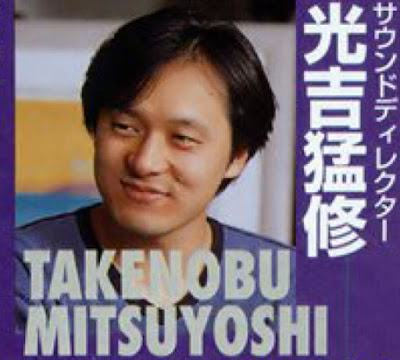
Shenmue's Sound Director, Takenobu Mitsuyoshi

 "Yu Suzuki kept nagging us: the music during the game needs to be there, but mustn't draw attention to itself. For people like us who had previously created ordinary game music, finding the right balance was extremely difficult, and it gave us a hard time." - Takenobu Mitsuyoshi

A Contrary Approach to Game Music & The Challenge of Creating Music That's "Natural" 

Q: When did you start working on Shenmue?

Mitsuyoshi: I've been working on Shenmue ever since it was being made on the Saturn. At the time, I was also working on the arcade version of Virtua Fighter 3, but at any rate, I've done everything that relates to Shenmue's sound since the beginning.

Q: During the Premiere*, it was mentioned that the concept for the game was built out starting from a single song, wasn't it? How did that work?

* The Shenmue Premiere was held in Yokohama at the end of December 1998 (and other cities around Japan following).

Mitsuyoshi: At the beginning, Mr. Suzuki talked about wanting to create something like Disney: the music would come first, and that would inspire the drawing of art and designing of the characters. I thought this approach of building up from sound and music would be worth trying. At that time, there was already a main scenario in place, but it wasn't yet in a detailed form. So the concept for the game  was built up drawing inspiration from a piece that I wrote while actually visiting China.

Q: What did the new hardware (the Dreamcast) allow you to do in terms of music?

Mitsuyoshi: The most obvious thing is the number of [simultaneous] sounds, which is twice that of the Saturn. Things that hadn't been possible on the Saturn due to its low number of sounds now became possible, whether it's the sound effects or the number of drums. Another thing is compression. We were able to compress the data space needed without lowering the sound quality, so we were able to include more sounds. In fact, there are many things we were able to do thanks to the change of hardware.

Q: By the way, at the Premiere, I saw the names of many people involved in sound, including Yuzo Koshiro. Around how many people were involved in the music for Shenmue?

Mitsuyoshi: It would be about 30 people.

Q: Er, would that be a large number? Or a small one?

Mitsuyoshi: In an ordinary game, there are usually one or two people in charge of sound [laughs].

Q: Is there a reason why there were so many?

Mitsuyoshi: I think it's because everything needed to be at such a large scale. That goes for the number of requested music pieces, as well as their quality, and speed [of delivery]. I guess it wasn't a case of "the more, the better", but it speaks to the scale of Shenmue itself. 

Q: Ah... By the way, while listening to your response, I was just thinking that when you play Shenmue, it doesn't seem like there are that many songs. It seems so natural.

Mitsuyoshi: That's very perceptive of you [laughs]. But I'll take that as a compliment.

Q: This is just my own thought but... Shenmue's music doesn't sound like game music. Game music is written to stick in your head once you hear it, like Daytona USA for example, right? But Shenmue sounds as if it's trying to do the opposite of that. It feels so natural that you don't notice it. But it conveys the atmosphere subtly.

Mitsuyoshi: You've hit the nail on the head [laughs]. Actually, that's something Mr. Suzuki has kept nagging me about - he said the music during the game needs to be there but mustn't draw attention to itself. For people like us who previously created typical game music, finding the right balance was extremely difficult and challenging for us. We went back and forwards like this many times: "I've tried writing it like this" and "No, not like that" [laughs]. In the end, it sounded natural. It took a lot of hard work to get to the point where the music is present without drawing attention to itself.

Q: That's a first, isn't it? As game music, it seems like it would be very difficult to compose.

Mitsuyoshi: It was difficult, it really was [laughs]. It's not really my strong suit. I think my songwriting is all about "standing out" [laughs]. Nevertheless, I emphasized the music in places like significant cut scenes or the prologue, as opposed to the free quest music. But it was a good learning experience. I learned how hard it is to make normal music.

Q: What would you say is one of Shenmue's highlights?

Mitsuyoshi: Lately, I've been thinking over the fact that it's fully voiced. Also the attention to detail in the sound effects. I'd like people to take a moment to listen to the details of the sounds in the city.
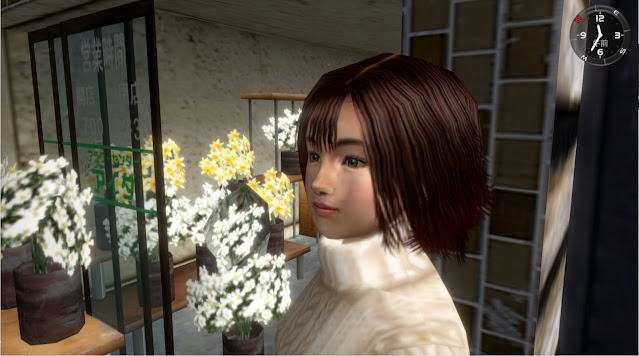
[Screenshot from Shenmue I & II release]

Fully Voiced: it's not about the songs, but also the voices, which are a major attraction of Shenmue: a work of such a grand scale that is fully voiced. Once you've tried Shenmue, other titles may feel lacking.
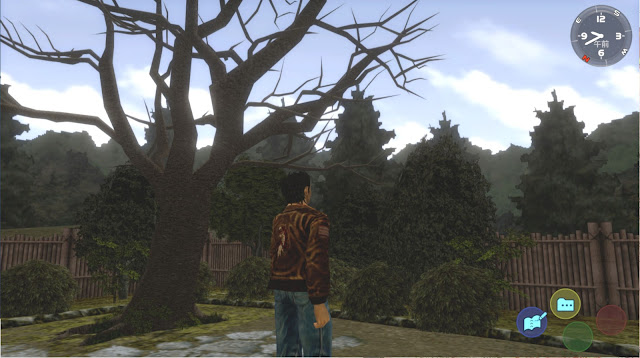

[Screenshot from Shenmue I & II release]

Music that sounds natural in a game: a concept that's actually more difficult than one might imagine. Listening attentively to its craftsmanship and attention to detail, which appears to challenge the conventional wisdom of game music, will make you realize just how remarkable it is.


About Takenobu Mitsuyoshi

Mitsuyoshi has led the sound for some of AM2's best-known titles, including Daytona USA and the Virtua Fighter series. The reason he hasn't been visible for a long time is due to his involvement in Shenmue. He was in charge of the entirety of the sound in Shenmue.
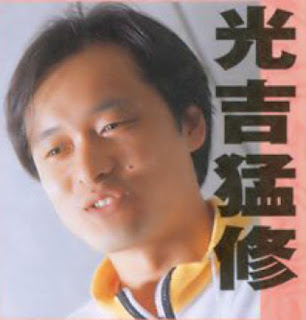
Takenobu Mitsuyoshi

-- End of translation --

Source: Dreamcast Magazine, 24th December 1999


Become a Patron!

Monday, July 10, 2023

Poll Result: Patrons' Choice Topic for July 2023

Every month Phantom River Stone holds a poll among our patrons to choose a topic for the blog in the coming month. After tallying the votes (including accumulated votes from previous months), the winning topic that has been voted this time is:

"Unlocking the Mystery: The Significance of Two Letters"

Within the world of Shenmue, a tale unfolds that revolves around two intriguing letters near the start. These letters set the stage for the enigmatic narrative to unravel.

The first letter, written by Ryo's late father, Iwao Hazuki, takes on a poignant meaning after his untimely demise. Ryo discovers it on his father's desk, and as he reads the words of advice and wisdom, a realization strikes him.

It seems clear that Iwao had a sense that his life was in peril, prompting him to leave the letter out for Ryo to find.


Adding to the intrigue, a second letter arrives from Hong Kong, sent by a mysterious individual whom Ryo later learns is named Zhu Yuan Da. It is written in cryptic Chinese script, and arrives shortly after Iwao's passing.

As Ryo has it translated, he uncovers that it was sent as a warning to his father but its arrival was too late to have served its intended purpose.


This raises an important question: how did Iwao Hazuki come to be aware of the imminent threat to his life? To explore this further, in this upcoming post we will examine the letters closely, comparing the Japanese and Chinese sources with the English translations provided by the game. Perhaps within these texts, additional clues or alternative interpretations may be discovered that can shed light on this mystery.

Stay tuned for the upcoming article, where we delve deeper into the secrets of the letters.

This topic was suggested by blog patrons Patrick Fuller and James Brown.

Become a Patron!

Thursday, June 15, 2023

Interview w/ Shenmue Main Designer: Masanori Oe, Dec 1999 | Dreamcast Magazine

In the December 24th 1999 edition of the Japanese Dreamcast Magazine, two short but insightful developer interviews were published as part of a 16-page special feature about Shenmue, serving to stir up excitement for the game's imminent release. The interviews themselves took place approximately 3 weeks prior to Shenmue's release in Japan at the end of December.

This post is a translation of the interview with Masanori Oe, who is credited as Shenmue's main designer.

Shenmue's main designer, Masanori Oe (also written Ohe)

The article translation begins below.

Become a Patron!

Tuesday, June 6, 2023

Poll Result: Patrons' Choice Topic for June 2023

Every month Phantom River Stone holds a poll among our patrons to choose a topic for the blog in the coming month. After tallying the votes (including accumulated votes from previous months), the winning topic that has been voted this time is:

"More tweeted anecdotes from former Shenmue developer Morio Ashizuka"

"Morio Ashizuka" is the pseudonym used on Twitter by a former developer who was deeply involved with development of the first two Shenmue games, in particular character animations and motion capture. He tweets prolifically about video games, SEGA and other topics - along with occasional fascinating insights and anecdotes from the day.

Last time, these were the topics we included in our original post:
  • Revelation #1: Dyeing Yuan's Hair for Muecas
  • Revelation #2: NPC Recycling in Shenmue II's Opening Scene
  • Revelation #3: Ryo Hazuki The Walking Legend
  • Revelation #4: Shenmue I's Opening Scene Polish
  • Revelation #5: Character Skeleton Changes from Shenmue I to II
  • Revelation #6: Round-the-Clock Debugging
  • Revelation #7: Reuse of Ryo Hazuki's Bowing Motion
  • Revelation #8: Shenmue I's Bad Ending Created In One Night
  • Revelation #9: Ryo's "Cola Face"
  • Revelation #10: Joy's Original Costume Design & Motorcycle Branding
  • Revelation #11: Fuku-san Avoided a Kidnapping
  • Revelation #12: A Comedic Version of What's Shenmue
  • Bonus Revelation: Yu's Favorite Character in Shenmue I
This time we'll be translating a whole new batch of Shenmue-related tweets from Ashizuka, again touching on his many experiences during the game's development.

Hiroshi Fujioka (voice and motion capture actor for Iwao Hazuki in the Japanese version) at the SEGA motion capture studio (Tweet source)

To be published in an up-coming post on the blog. Early preview available on Patreon!

Become a Patron!

Monday, May 15, 2023

Suka Pass RELEASE v1.9: Free Market!

James Brown (from the Shenmue Dojo) and myself have just released a new update for Suka Pass, the fan-made app that recreates the Shenmue Passport for your mobile device, so we wanted to let you know what it's all about.

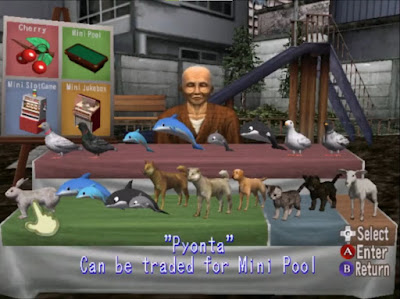
Version 1.9 introduces the Free Market, which was a section of the Passport that let you exchange capsule toys for various animal toy prizes. The screen below shows the original screen in the Passport for the Dreamcast.

Oishi-san has set up a stand at Suzume Park, and the board behind him explains which type of capsule toy is needed to swap for a toy on the table (the cloth color on which the animals sit indicate the type of toy).

The original Free Market section of the Shenmue Passport

The Free Market in Suka Pass has been recreated with the same concept, together with some added twists.


17 capsule toys have been hidden inside the app to find, and they can be unlocked by performing certain actions. Once a capsule toy has been found, visit the Free Market to trade and start your animal toy collection.


An additional bonus item is awarded if you can successfully find them all!

James has put together a fantastic video showcasing this new feature, as well as giving an overview of the the app's other sections.


Suka Pass is available for iOS and Android devices.

Head over to the official Suka Pass site for download links!

We'd love to hear how people get on with locating the capsule toys. James has made a thread about the new release over on the Shenmue Dojo forums for any feedback or comments.
Become a Patron!

Saturday, May 13, 2023

Phoenix & Dragon Mirrors: Lore at a Glance | Mind Map

In our recent lore-related posts, we carried out a detailed examination of the lore surrounding the Mirrors, and all the various events, beliefs, clues and motivations surrounding them that we as players have learned (along with Ryo) during the first three Shenmue games. These were also covered in depth by SkillJim in his stream for the Shenmue Dojo channel (which are linked at the end of each post).


Mind Map:

As a summary of what was covered in these posts, and to make it easier to visualize how the various pieces of the puzzle fit together, here is the complete "mind map" diagram illustrating how these concepts relate to each other.

The diagram can be seen as a preview below.

There is also this direct link to the image for easier viewing and zooming. It has been saved as a high resolution image to retain the text detail, and will require zooming in close!

Mirror Lore Mind Map

A few elements have been highlighted in yellow on the diagram as they represent some of the core recurring themes seen in Shenmue: the Prophecy that Shenhua recites, the symbolism of the Dragon and the Phoenix together with the Mirrors, and the mysterious "Treasure" they may point to whose nature is unknown.

Hopefully it will not be long before we can see how the mystery of the Dragon and Phoenix mirrors and the lore surrounding them plays out in the rest of the Shenmue story.


Become a Patron!

Wednesday, May 10, 2023

Free Guy: Interview with Yu Suzuki, Keiichiro Toyama & Kazunobu Sato by IGN Japan (2021) | Video

In 2021, IGN Japan invited three legendary Japanese game creators (Yu Suzuki, creator of Shenmue and numerous hit arcade games; Keiichiro Toyamacreator of the Silent Hill, Siren and Gravity Rush franchises and Kazunobu Sato, producer of The Last Guardian) to a private viewing of the newly-released film Free Guy.

While the interview is based around the movie, several themes that relate to game creation are explored and discussed.

Free City Interview Video


We have added translated subtitles in English to the interview video below. A written transcript also follows the video.


Interview Transcription


IGN Japan: Hi everyone, this is Daniel from IGN Japan. Today we'll be asking three game creators for their first impressions and thoughts on watching the movie Free Guy, which was released on 13th August (2021). This video is a promotional tie-up with the movie.

Let's start by introducing our guests. Firstly: Yu Suzuki. Thank you for being here.

Suzuki: Thank you.

Become a Patron!